BankruptcyAttorney-LasVegas

File for Free - Payments After Filing of $200 per Month - FILE FOR FREE

Las Vegas Bankruptcy Lawyer

Bankruptcy Basics: Filing for Chapter 13

April 7, 2017 By rayrichter

Chapter 13 is sometimes called the “wage earners” or “reorganization” bankruptcy. It is designed primarily for people with a regular income who may have fallen behind on their debt payments, and people who do not qualify for chapter 7 bankruptcy. In chapter 13, individuals work with a credit counselor and their attorney to develop a plan which allows them to restructure the timing of payments of most of their debts over a 3-5 year period. The debtor’s disposable net income (DNI) is used to cover a portion of their debts; this is the amount left over after all of the debtor’s monthly bills are paid. Once the debtor makes payments for 3-5 years, most remaining debts are discharged. There is no income qualification test for chapter 13, but unsecured debt must be less than $394,725 and secured debt less than $1,184,200 (these numbers are adjusted periodically).

The biggest advantage of chapter 13 is that it can prevent foreclosure and loss of home. The debtor continues to earn a regular paycheck and is able to eliminate some debts (medical bills, credit card debt) while getting caught up with past due mortgage payments. Debtors may still lose their home, however, if their mortgage company completes a foreclosure sale before the debtor’s bankruptcy petition is filed, or if the debtor does not make the mortgage payments which fall due after the petition date. Another advantage of chapter 13 is that it protects co-signers and prevents debtors from having to deal personally with their creditors.

The chapter 13 process begins with credit counseling for the debtor with an approved agency, at least 180 days prior to filing the bankruptcy petition. A payment schedule will be determined, which is submitted at the time of petition or within 14 days, along with documentation and required fees. The documentation will include lists of creditors, assets, liabilities, monthly expenditures, contracts, etc. The debtor may arrange to pay the required fees in up to four installments.

Once the petition is filed, a trustee is appointed who will oversee the process, collect DNI from the debtor, and distribute monies to creditors in a structured and timely fashion. At this point a “stay” is put in place which stops home foreclosure and prevents creditors from suing, garnishing wages, or making harassing phone calls to the debtor. The trustee will arrange for a meeting with the creditors within 21-50 days of petition; the debtor must be present to answer questions. Then a hearing is held before a judge, who will determine whether the payment plan is feasible and follows the stipulations of the bankruptcy code.

Payments of DNI to the trustee must begin within 30 days of filing for bankruptcy. Following the payment schedule, payments are made biweekly or monthly to the trustee (payroll deduction may be used), who then pays the creditors. The first claims paid by the trustee cover most taxes and the cost of the bankruptcy proceedings. They then pay the holders of secured debts, followed by unsecured debts. Creditors may receive less than what they are actually owed.

The final step of chapter 13 is the discharge, or erasure, of most remaining debts. Generally long-term debts cannot be discharged through chapter 13, such as mortgage, child support, student loans, or restitution owed for personal injury or death caused by DUI. The discharge rules for chapter 13 have recently undergone revision, and are more complex than the chapter 7 statutes.

An experienced bankruptcy attorney can help you navigate the nuances of the bankruptcy code to determine whether chapter 13 is the best solution for your financial situation. A free, 30-minute introductory appointment is available from the Law Office of Erik Severino at (702) 997-4149. Your case will be handled with his personal attention and his commitment to provide you with resolution, protection, and integrity in the process. Erik Severino has a degree in economics from the University of Nevada, Las Vegas, and his Juris Doctorate from the William S. Boyd School of Law, UNLV. He has been licensed to practice in Nevada since 2006, concentrated exclusively on consumer bankruptcy law since 2009, and in 2016 was awarded the Avvo Clients’ Choice Award. 

Making a Fresh Start with Chapter 7 Bankruptcy

March 31, 2017 By rayrichter

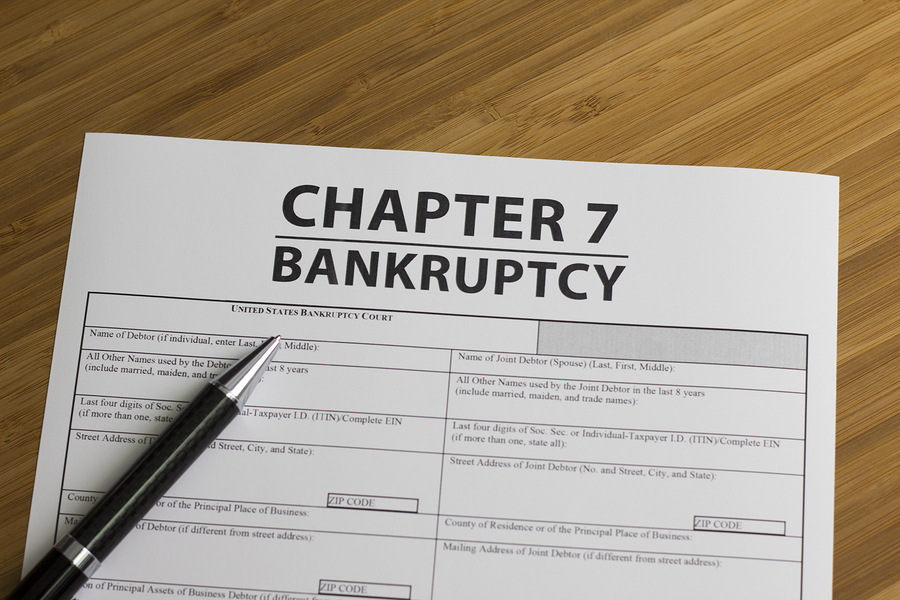
Chapter 7 bankruptcy is sometimes called the “fresh start” bankruptcy. The goal in filing for chapter 7 is to provide a clean slate for a debtor, allowing them to retain much of their property and receive a “discharge” that erases most of their debts. It is designed to help lower income wage earners (individuals, married couples, or small business owners) who have fewer assets. Some of the debtor’s non-exempt property and assets may be sold by a trustee and the money is used to pay creditors, but with skilled counsel this can usually be avoided. Chapter 7 is often a useful option for holders of upside-down mortgages (whose home is worth less than is owed) because the remaining balance of the mortgage is discharged after foreclosure.

In the vast majority of cases (about 90%), debtors will receive full discharges without losing any of their property. Most unsecured debts are discharged through chapter 7. This includes those debts which have been acquired without a lien; in other words, there is nothing for the creditor to take back from the debtor if payments are not made. Unsecured debts include things like hospital or medical bills; credit card debt; and utility bills. Back rent may be included in the items for discharge, although if the debtor is unable to continue paying future rent, the bankruptcy discharge does not prevent eviction. Most secured debts are also discharged in a bankruptcy settlement. In almost every case, our clients have assets that will be protected by exemptions allowed by Nevada bankruptcy code. If any property or assets are at risk, careful planning can alleviate the need to surrender any property.

Some debts cannot be discharged through chapter 7, including any credit or money obtained through fraudulent means.  Also ineligible for discharge are student loans, child support, alimony, cash advances obtained within 70 days of filing, and any luxury goods or services purchased within 90 days of filing. Certain fines or penalties owed to government agencies cannot be discharged, and some tax debts are also ineligible. A skilled bankruptcy attorney will be able to give you guidance on the tax stipulations. Further, any restitution due for DUI convictions cannot be discharged through chapter 7.

The process for chapter 7 generally can be completed in 4-6 months. The first step is to undergo debt counseling. Upon completion, you will receive a certificate and a debt repayment plan that you will present with your petition for bankruptcy. The next step is the means test to ascertain whether a debtor meets the requirements and prevents higher wage earners from abusing the provisions of chapter 7.

To qualify for chapter 7, you will need to show that your current monthly income is less than the median income for a household of your size. If you pass this part of the test, you can proceed with the filing; if not, you will need to complete the second phase of testing, showing that you do not have enough money left over each month to pay at least a portion of your unsecured debts. If you do not pass the means test, you will need to consider chapter 13 instead.

If you pass the means test, you may file for chapter 7. After submitting documentation about your financial situation and creditors, and paying the proper fees, a trustee will be appointed. At this point a “stay” is placed, preventing creditors from attempting to collect monies due while the proceedings are active. An estate is created and becomes the temporary legal owner of your assets. In order to retain certain items, such as a car, you will file an affirmation to show that you are able to continue making payments. At the end of the process, the debtor will finally have the fresh start they sought, released from liability and protected from creditors who can no longer take action to collect debts.

The decision to file chapter 7 is a very private matter and the process can be overwhelming. Call the Law Office of Erik Severino to arrange a free 30-minute introductory appointment. Your case will be handled with personal attention and a commitment to provide you with resolution, protection, and integrity. Erik Severino attained a degree in economics from the University of Nevada, Las Vegas, and his Juris Doctorate from the William S. Boyd School of Law, UNLV. Licensed to practice in Nevada since 2006, he has concentrated exclusively on Consumer Bankruptcy Law since 2009, and in 2016 was awarded the Avvo Clients’ Choice Award.